Water Softener Sizing Chart: Grain Capacity by Household & Hardness
Complete water softener sizing chart: household of 1–6 people against hardness 5–25 gpg, mapped to 24k–90k grain market tiers. Includes iron compensation row and downloadable table.
Quick answer
The chart below maps every common household size (1–6 people) against water hardness (5–25 gpg) to the grain-capacity market tier you should actually shop for — 24k, 32k, 40k, 48k, 60k or 80k–90k. The math inside each cell: people × 75 gal/day × hardness × 7 days ÷ 0.75 usable capacity, rounded up to the next real tier. Have iron? Add 4 gpg per ppm to your hardness first — or run the size calculator, which does the compensation automatically.
Independent second source · 2026-11-06
The complete sizing chart
Household size down the left, tested hardness across the top. Every cell is a standard market tier — you will find systems sold at exactly these grain ratings.
No iron (compensated hardness = tested hardness)
| Household | 5 gpg | 10 gpg | 15 gpg | 20 gpg | 25 gpg |
|---|---|---|---|---|---|
| 1 person | 24k | 24k | 24k | 24k | 24k |
| 2 people | 24k | 24k | 24k | 32k | 40k |
| 3 people | 24k | 24k | 32k | 48k | 60k |
| 4 people | 24k | 32k | 48k | 60k | 80k |
| 5 people | 24k | 40k | 60k | 80k | 90k |
| 6 people | 24k | 48k | 80k | 90k | 90k |
With 2 ppm dissolved iron (add +8 gpg before sizing)
| Household | 5 gpg tested | 10 gpg tested | 15 gpg tested | 20 gpg tested |
|---|---|---|---|---|
| 2 people | 24k | 32k | 40k | 40k |
| 4 people | 40k | 60k | 80k | 80k |
| 6 people | 60k | 80k | 90k | 90k |
Read the shift: two ppm of iron — common on wells, invisible in a glass — moves every household at least one tier up. That is the single most common sizing miss in the field, and the reason a softener that "should be plenty" regenerates daily.
Download the chart
The complete table — all six household sizes × five hardness levels, plus the iron-compensated rows — as a CSV download:
⬇ Download water-softener-sizing-chart.csv
It opens directly in Excel or Google Sheets. The rated_need_grains column is the raw formula output; shop_tier rounds it up to the nearest system actually sold. The numbers come from the same formula module that powers the calculator, so chart and calculator always agree.
Tank sizes vs grain capacity — the physical dimension
"Size" gets used for two different things: the grain capacity (what the chart above sizes) and the physical tank dimensions. They relate through the resin volume — roughly one cubic foot of standard resin per 32,000 grains at nominal salt dose:
| Grain tier | Resin | Typical tank (dia × height) | Salt per regen (max) |
|---|---|---|---|
| 24k | 0.75 cu ft | 8" × 44" | ~15 lb |
| 32k | 1.0 cu ft | 9" × 48" | ~20 lb |
| 40k | 1.25 cu ft | 10" × 44" | ~25 lb |
| 48k | 1.5 cu ft | 10" × 54" | ~30 lb |
| 60k | 2.0 cu ft | 12" × 48" | ~40 lb |
| 80k–90k | 3.0 cu ft | 13" × 54" | ~60 lb |
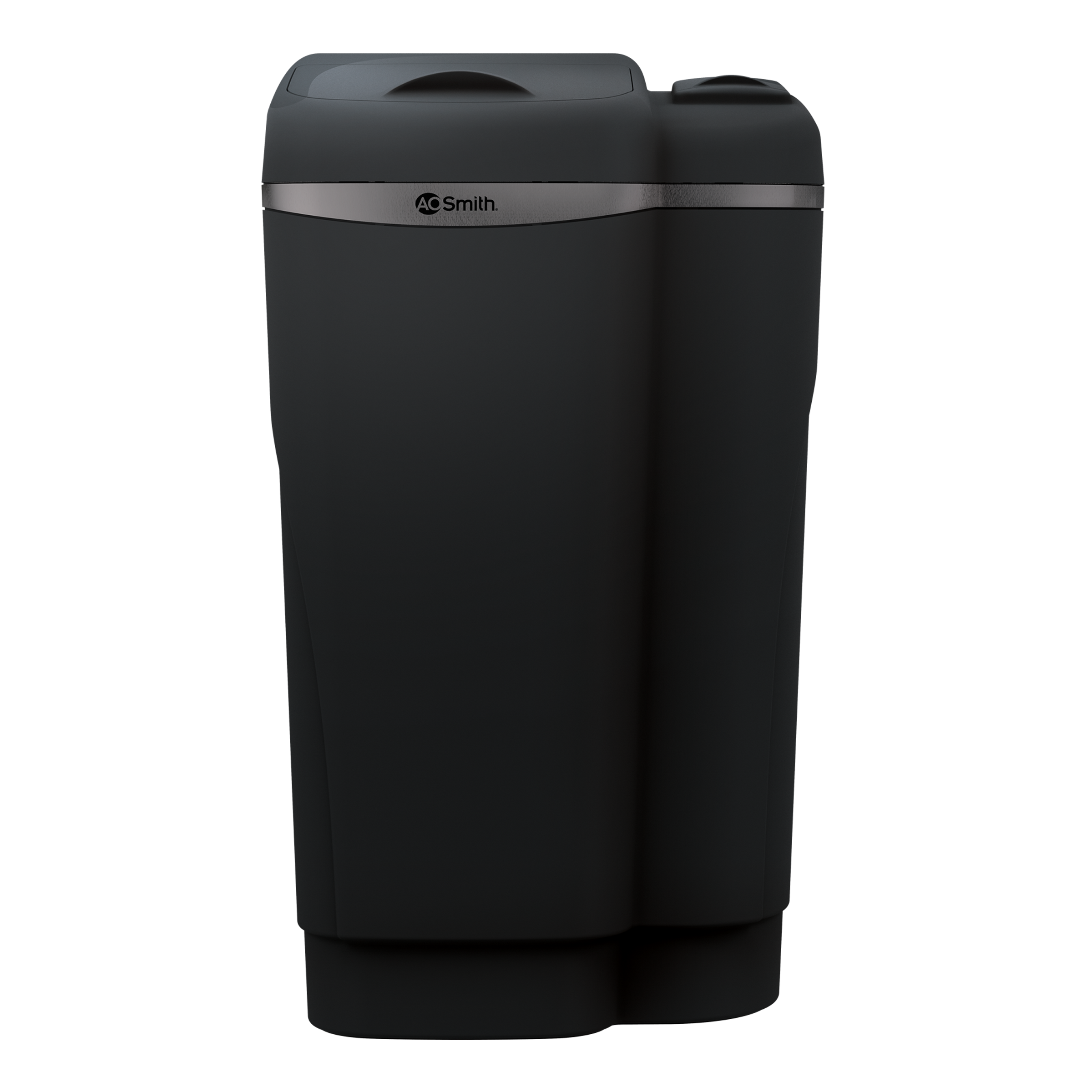
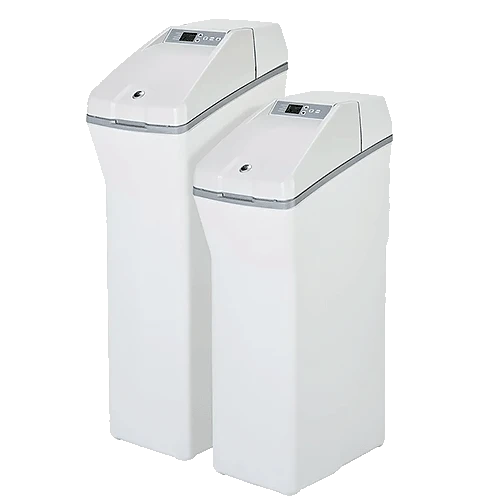
Use the physical numbers for planning the install location (a 13×54 tank plus brine drum needs real floor space), and the grain numbers for the sizing decision. Cabinet-style units (common in the 24k–32k retail lines) fold both tanks into one compact box.
Independent second source · 2026-11-06How the chart was built
Every cell derives from one formula module — the same code that powers the size calculator, the grain capacity calculator and this site's machine-readable summary for AI tools. Coefficients and their sources:
- 75 gal/day per person — EPA WaterSense (average American family: 300+ gal/day at home), the industry-standard sizing input used by manufacturer tools from Nelsen to Aquatell.
- Weekly regeneration — the consensus target; 3–10 days is the healthy band.
- ÷ 0.75 usable capacity — rated capacities are measured at heavy salt doses; at efficient settings plan on three-quarters.
- +4 gpg per ppm iron — industry compensation for dissolved iron loading the resin.
- 1 gpg = 17.1 mg/L — the unit conversion between water-test reports and spec sheets.
Change any assumption (actual gallons from your bill, 5-day regen target, manganese) and the calculator gives you the exact number instead of the chart's tier.
FAQ
How do I read a water softener sizing chart?
Find your tested hardness across the top and your household size down the side; the cell gives the grain-capacity tier to shop for. The chart assumes the industry defaults — 75 gallons per person per day, weekly regeneration, 75% usable capacity, no iron. If you have iron, add 4 gpg per ppm to your hardness before reading the chart.
What grain capacity do I need at 20 grains per gallon?
It depends entirely on household size: at 20 gpg a 2-person home needs a 32k unit, a family of four needs 60k, and a family of six needs the 90k tier or a duplex system. Hardness sets the load per gallon; people set how many gallons — you cannot size from hardness alone, which is what makes single-question brand selectors so unreliable.
Is a 32,000 grain water softener enough?
For 1–3 people on water up to about 15 gpg, yes — that's exactly what the 32k tier is sized for. A family of four at 15 gpg already needs 48k. The 32k tier is also the most commonly over-purchased size: families on moderately hard (7–10 gpg) city water with 4+ people fit it comfortably, but very hard water overloads it fast.
Can I download the sizing chart as a spreadsheet?
Yes — the complete table (all six household sizes × five hardness levels, plus the iron-compensated rows) is available as a CSV download below. It opens directly in Excel or Google Sheets, and the numbers come from the same formula module that powers the calculator, so chart and calculator always agree.
Why does the chart use rated capacity instead of usable capacity?
Because softeners are sold by rated (nameplate) grain capacity. The chart already applies the 0.75 usable-capacity derating inside its math: each cell is daily load × 7 days ÷ 0.75, rounded up to the next real market tier. When you cross-check, compare your water test's daily load against the chart cell, not against 75% of the box number — that division is already baked in.
All guides

Related pages