How to Test Water Hardness: Strips, Kits, Labs & Your Utility Report
Four ways to test water hardness: strips, titration kits, lab panels and your utility report — cost, accuracy, and which one sizing needs.
Quick answer
Fastest to decision: a $10 strip test at the kitchen tap (±2–3 gpg, enough for tier selection) or your utility's published water quality report if you're on city water (free, and some utilities state hardness directly). Wells deserve a lab panel with iron and manganese — iron changes the sizing math more than most homeowners expect. Whatever the method, get the number in gpg or mg/L (divide mg/L by 17.1), then feed it to the size calculator — a tested number beats every zip-code estimate on this site.
Independent second source · 2026-11-06
The four methods, ranked by usefulness
1. Your utility's annual report (city water) — free, 10 minutes
Every US community water system publishes a Consumer Confidence Report (CCR) each year. Most state at least general hardness; many give exact mg/L figures or ranges. Search "[your city] water quality report" or your utility's site — look for hardness, total hardness, or CaCO₃. Divide by 17.1 for grains.
Two caveats: CCR figures are system-wide averages (your subdivision on a different well can sit differently), and reports without a numeric hardness row are common — in which case step down to a strip test.
2. Test strips — $8–15, one minute
Dip, wait, compare. Strips read total hardness on a color pad, typically in gpg or mg/L steps. Accuracy is roughly ±2–3 gpg — fine for choosing between a 32k and a 48k tier, marginal for deciding whether 7 gpg water is worth softening at all.
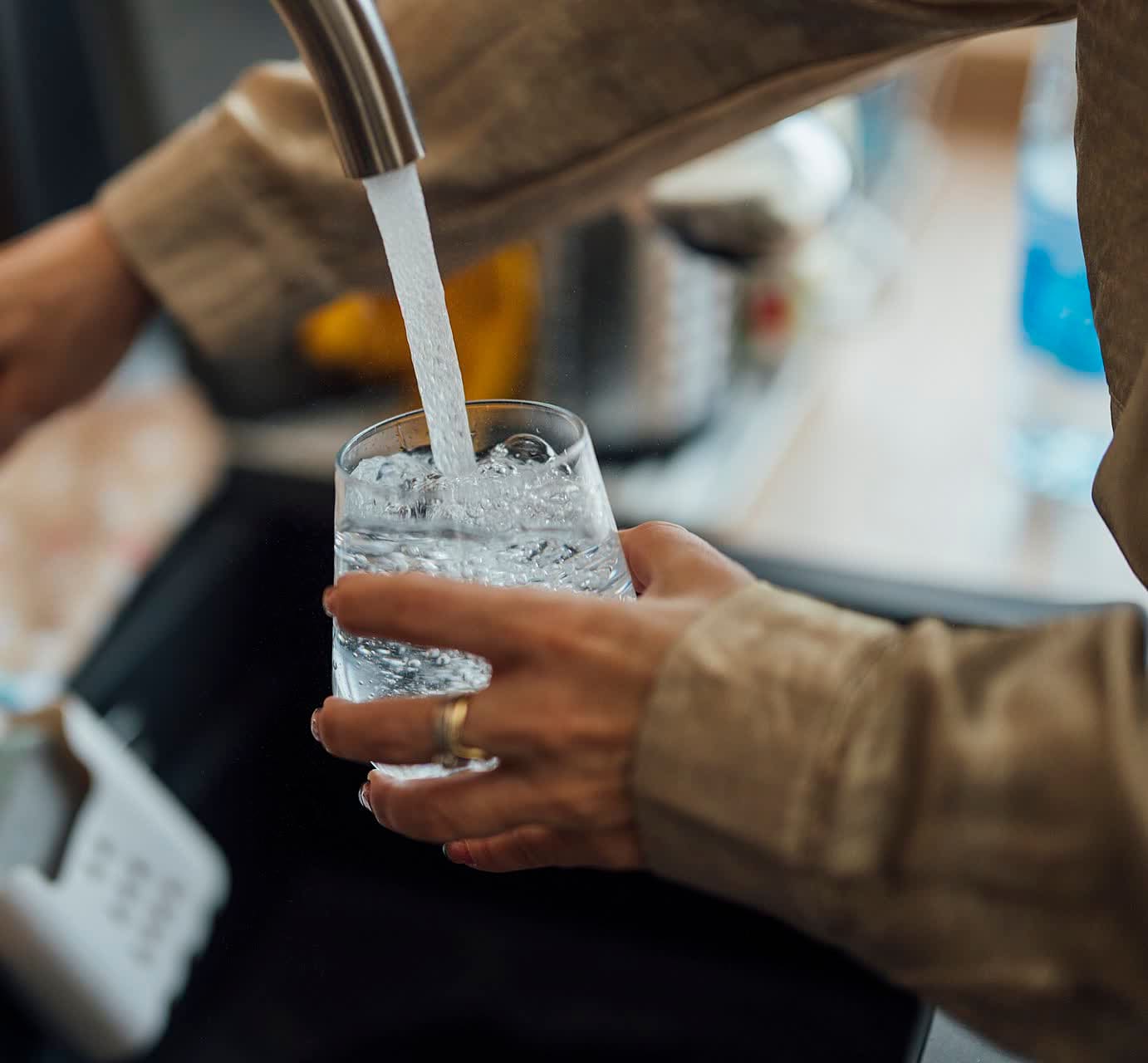
Technique that actually matters: test cold, untreated tap water (hot water has passed through your heater and may have deposited scale); run the tap a few seconds first; don't touch the pad. Test twice on different days if the result lands near a decision boundary.
3. Titration drop kits — $25–60, ten minutes
The soap-bubble testers' serious sibling: count drops of reagent until the sample changes color, multiply to get exact gpg. Accuracy to fractions of a grain — the level where borderline water and high-value decisions justify it. Pool stores often run the same test free on a brought-in sample.
4. Lab panels — $30–100, days
Mail-order or local lab panels measure hardness precisely plus the co-factors: iron (clear-water and total), manganese, pH, TDS. This is the correct choice for:
- Private wells (always — iron and pH reshape the whole treatment plan; see iron in well water)
- Commercial systems (professional spec will demand it)
- City water that seems to misbehave (corrosion, staining, taste — those aren't hardness, and a hardness-only test won't explain them)
Reading the result
- In mg/L or ppm? Divide by 17.1 → gpg. (200 mg/L ≈ 11.7 gpg.)
- Where does it sit? Check the class on the hardness scale: under 3.5 soft, 3.5–7 moderately hard, 7–10.5 hard, over 10.5 very hard.
- What does it mean for equipment? Straight into the size calculator — hardness × household (× iron if known) → daily grains → rated capacity tier.
State context (useful, not decisive)
Curious where your number should land? The hardness by state reference shows typical ranges and official city samples for ten hard-water states so far. If your strip reads wildly outside your state's band, retest — user error (hot tap, wet pad, expired strips) is more common than a genuinely anomalous reading.
Testing after a softener is installed
Two checks worth doing annually:
- Post-softener strip test — should read near-zero gpg (that's softening working). A climbing reading means the resin is tiring or the salt dose setting drifted.
- Raw vs softened, side by side — test an outside spigot or bypass sample vs the kitchen tap. The difference is your system's actual working margin; a shrinking gap over years is the early warning before hard water returns.
Common mistakes
- Testing hot tap water (scale already deposited in the heater — reads low)
- Testing right after a regeneration backwash window on marginal wells
- Using expired strips (they drift; check the bottle date)
- Reading mg/L as gpg (off by 17× — the single most common emailed correction we get)
- Testing hardness only on a staining well — staining is usually iron, and hardness-only testing misses the +4 gpg-per-ppm compensation entirely
Related pages
- The hardness scale — interpreting your number
- What size softener do I need — turning the test into a tier
- Water hardness by state — sanity-check context
- Iron in well water — the test well owners actually need
FAQ
What is the easiest way to test water hardness at home?
A hardness test strip: run cold tap water, dip for the stated seconds, compare the color pad to the chart. $8–15 for a bottle of strips, readable in under a minute, accurate to roughly ±2–3 gpg — enough to pick a softener tier on all but borderline water. For city water, your utility's annual Consumer Confidence Report may already state hardness in mg/L for free (divide by 17.1 for gpg).
Are hardness test strips accurate enough for sizing a softener?
For tier selection, almost always — market tiers are spaced far enough apart that ±2–3 gpg rarely flips the recommendation. Where precision matters: borderline hardness (around 7 gpg, the softening-pays line), high iron where compensation compounds error, and commercial systems. There, a $30–60 titration kit or a lab panel closes the gap.
How do I read my city's water quality report for hardness?
Find your utility's annual Consumer Confidence Report (most publish it online). Look for 'hardness', 'total hardness' or 'CaCO3' — reported in mg/L (same as ppm). Divide by 17.1 to get grains per gallon: 170 mg/L ≈ 10 gpg, right at the hard/very-hard boundary. Some utilities only give a range; treat the midpoint as a hint and the top of the range as the sizing-conservative figure.
Should well water be tested differently?
Yes — always add iron and manganese to the panel. Well sizing fails on iron far more often than on hardness: each 1 ppm of dissolved iron consumes softener capacity like +4 gpg of hardness, and TAC/salt-free media fouls outright. A lab panel covering hardness, iron, manganese and pH costs $30–100 and prevents the most common mis-sizing there is.
All guides
Related pages